If you are sourcing metal parts in Perth and choosing between fibre laser and plasma cutting, the honest answer is that it depends on the job. Both cut metal well and both are widely used in WA. The trick is knowing which one suits your project so you do not pay for capability you do not need, or end up with parts that need extra finishing.
Key takeaways
- Fibre laser cutting suits most Perth jobs up to around 32 mm , including mining brackets, production runs, and stainless or aluminium work.
- Plasma is the better call for plate over 32 mm or rusty and scaled material where edge finish is not critical.
- Laser holds tighter tolerances (around plus or minus 0.1 mm) and gives weld ready edges, saving time on finishing.
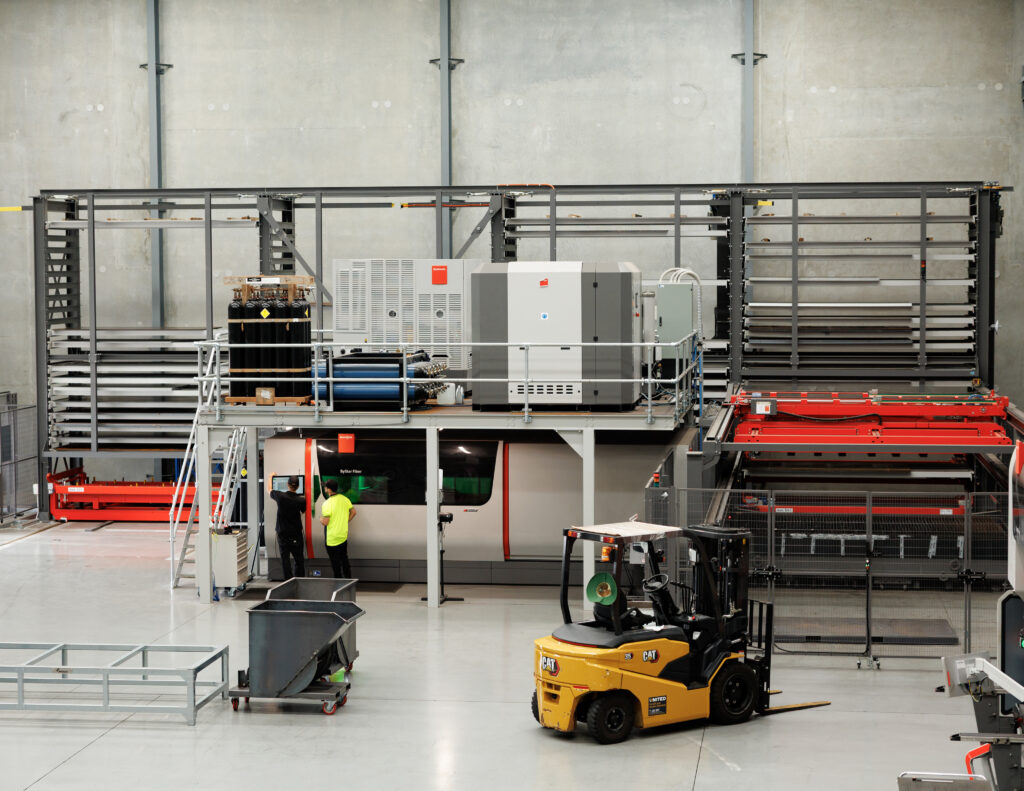
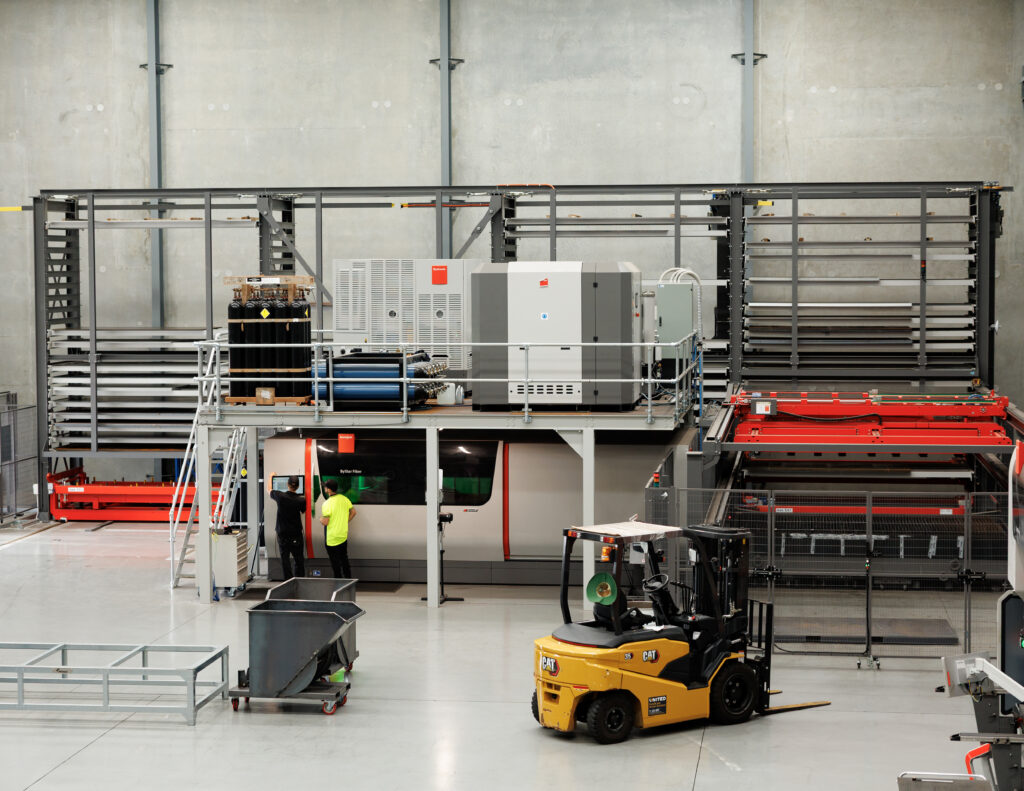
- Sprint MP runs a 20kW fibre laser, a 150 ton press brake and full fabrication in Malaga, with same day quoting on uploaded drawings.
The short answer
Fibre laser is the right choice for most jobs in Perth today, especially sheet and plate up to around 32 mm, intricate shapes, stainless and aluminium, production runs, and anything where edge quality matters. Plasma still wins on very thick plate and rusty or scaled material where finish is not critical.
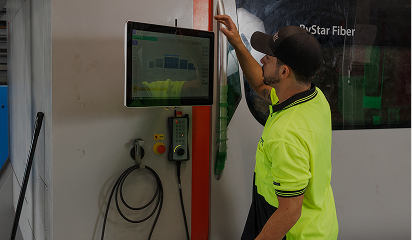
At Sprint MP we run a 20kW fibre laser, one of the most powerful in WA. The higher wattage pushes laser cutting further into thicker material where plasma used to be the only practical option.
How each process works
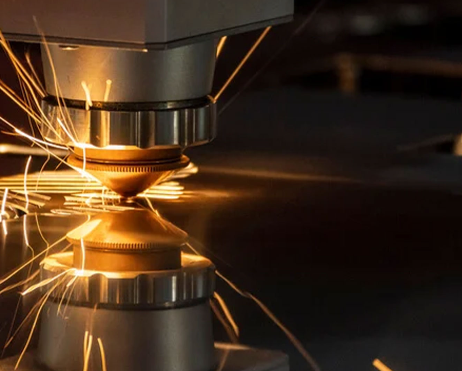
Fibre laser uses a focused beam of light delivered through optical fibre to melt metal at the cut line, with assist gas blowing the melt out of the kerf. The result is a narrow kerf, small heat affected zone, and clean tight tolerances on complex shapes.
Plasma uses a high velocity jet of electrically charged gas to melt through metal. It is forgiving, handles thick plate well, and the machines are cheaper to run. The trade off is a wider kerf, more dross and rougher edges that often need grinding.
Fibre laser vs plasma at a glance
| Factor | Fibre Laser | Plasma | Best For |
| Edge quality | Clean, weld-ready | Rougher, often needs grinding | Laser |
| Tolerance | +/- 0.1 mm | +/- 1 mm | Laser |
| Thin to mid plate (up to 25 mm) | Fast, accurate, low waste | Slower, rougher | Laser |
| Heavy plate (over 30 mm) | Slows down past capacity | Comfortable territory | Plasma |
| Rusty or scaled steel | Surface affects beam | Cuts through without issue | Plasma |
| Stainless and aluminium | Clean, bright edge | Discolouration and rough edge | Laser |
| Production runs | Repeatable and fast | Slower, more handling | Laser |
When fibre laser wins
Choose fibre laser when you need clean weld ready edges, tight tolerances, intricate shapes, stainless or aluminium, or repeatable production parts. Our 20kW machine handles thin sheet through to 32 mm plate fast, and integrates with CNC nesting software to reduce material waste on bigger runs.
For most mining brackets, gussets, mounting plates, wear liners, machine frames, enclosures and custom fabrication work, laser is the obvious answer.
When plasma still makes sense
Plasma is the better call for thick plate over 32 mm, reclaimed or weathered steel with heavy scale, and rough cuts that will be ground, machined or hidden inside a structure. If edge finish does not matter and you are cutting thick material, plasma can do the job for less.
What this means for Perth industries
Mining components mostly sit in the 0.6 to 32 mm range, which is fibre laser territory. Manufacturing production runs favour laser for repeatability and clean nesting. Custom one off fabrication usually involves mixed materials and complex shapes, again suited to laser. Heavy structural cuts over 30 mm may suit plasma or oxy fuel instead.
Cost comparison
Plasma is usually cheaper per metre on thick plate. Fibre laser is more cost effective on thin to mid thickness material because the cut is faster, the finish is ready to use, and tight nesting reduces wasted sheet. Once you factor in grinding and rework, laser often comes out cheaper overall.
The best way to know what your job will cost is to get it quoted. Upload your drawings and we will price the cutting, bending, fabrication and finishing in one go, usually within hours.